Memory play
The Glass MenagerieMemory play is the drama’s governing form: Tom is both a character in the family story and its openly acknowledged narrator, shaping the past through selective, emotionally charged recollection. The form makes the stage’s departures from realism part of the subject itself, as the remembered family history returns not as a neutral record but as an experience altered by distance, loss, and continued attachment.
Definition and Stage Language
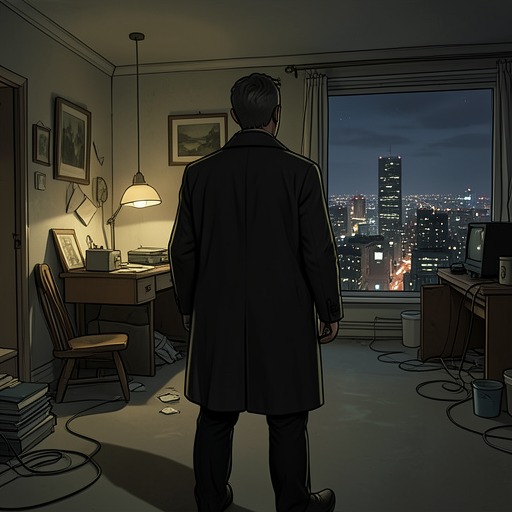
Tom explains that memory omits some details and exaggerates others according to their emotional value. Because memory is seated predominantly in the heart, the apartment’s interior is dim and poetic rather than a realistic reproduction. The lighting and visual emphasis therefore enact the principle of recollection: what matters emotionally may grow vivid, while other details recede.
Music further marks the remembered world as subjective. The play is sentimental and nonrealistic, and, in Tom’s account, everything in memory seems to happen to music; the fiddle in the wings makes that quality audible. Music is not merely accompaniment to a sequence of events but part of the atmosphere through which those events are recalled.
Tom as Narrator and Character
The narration is an undisguised theatrical convention. Tom says that he takes whatever license with dramatic convention serves his purposes, and his double position—as the person who tells the story and the person who once lived inside it—keeps the audience aware that the action is being shaped in retrospect. His opening address describes the drama as an illusion that presents truth in a particular form: the theatrical artifice is visible rather than concealed.
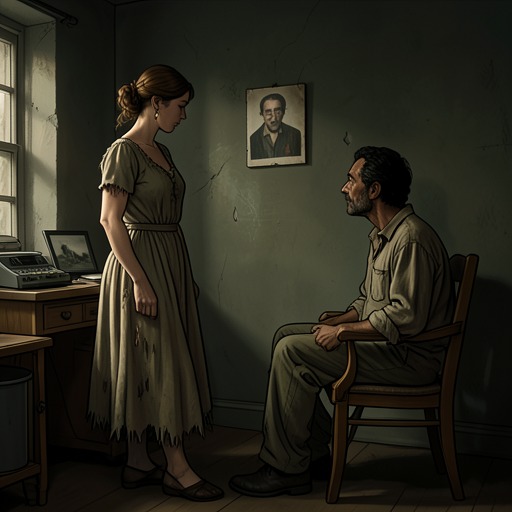
The family story is accordingly framed by a narrator with a personal stake in its people and losses. Tom identifies Amanda as his mother, Laura as his sister, and the gentleman caller as a figure from a world from which the family has been set apart. He also describes that caller as both a realistic emissary and a symbol of the long-delayed, expected possibility for which people live. The passage reveals how the memory-play form can hold literal character and symbolic meaning together without disguising the narrator’s role in making that choice.
Recollection, Loss, and Return
The ending shows that recollection is not confined to the past being staged. Tom recounts leaving St. Louis after being fired for writing a poem on a shoe-box lid, descending the fire escape for the last time, and traveling from city to city in his father’s footsteps. Movement does not free him from what he left behind: he says he was pursued, and that a familiar piece of music or a piece of transparent glass could bring the memory back.
The recurring images of music and glass make the return of memory concrete. Tom imagines seeing colored bottles in a shop window, then turning to find Laura’s eyes; the remembered sister interrupts the traveling narrator’s present and exposes the limits of escape. His final plea that Laura blow out the candles closes the play through a stage action synchronized with his speech. In this form, the past does not simply conclude: it reappears in the act of narration, and Tom’s attempt to leave Laura behind becomes a continuing obligation to remember her.